
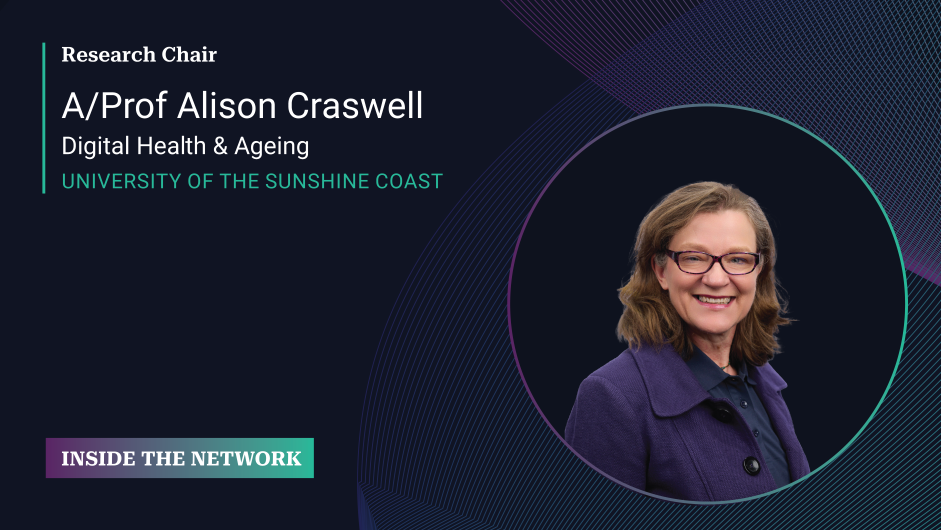
Field: Ageing, Nursing, Digital Health
Based at: University of the Sunshine Coast
Partnered with: Cisco + UniSC
What inspires your work?
I’m inspired by seeing what’s possible with emerging innovative digital tools and thinking big about how they can be adapted to healthcare in meaningful ways. I’m fortunate to be able to combine clinical experience with research, working closely with health professionals to make a difference in the care for older adults, while also supporting the people who care for them. Knowing that this work can make a real impact is what motivates me.
What big problem or challenge are you trying to solve right now? One of the most urgent challenges we’re addressing is workplace violence in healthcare settings. We’re developing a machine learning model using Meraki cameras to detect early signs of behavioural escalation in older adults, giving clinicians an opportunity to intervene early and de-escalate situations before they become violent or unsafe. It’s complex work, but the potential impact for patients, families, and frontline staff is huge.
What are you excited about in 2026?
The Health Productivity Lab at UniSC is currently in the fit-out phase, so I’m excited to see this completed and come to life. This space will allow us to properly test and trial proof-of-concept technologies in a safe, controlled environment before they’re introduced into real clinical settings. It’s a critical step in translating innovation into practice and supporting responsible, real-world adoption.
Why is collaboration so important in your field?
Collaboration is essential. Meaningful innovation only happens when real clinical problems are directly connected to the people designing solutions. The most successful outcomes occur when innovators, clinicians and researchers work together, ensuring technology is shaped by frontline experience and genuine need. This kind of collaboration is exactly what enables solutions to move beyond ideas into impact.
One piece of advice for emerging innovators?
Connect with the workplace. Talk to frontline staff, listen to their experiences and understand the challenges they face every day. The best solutions are created with the people who will use them, not for them.